

When to engage it

Six contexts

Six contexts in which executive coaching is the right work.

A leader has stepped up into a CEO, MD, or divisional MD role and needs to recalibrate from leading a function to leading the whole.

Typical fit: 1:1 Executive Coaching.

A founder is preparing to bring in a CEO or to step up to chair, and the transition needs to be deliberate rather than reactive.

Typical fit: 1:1 Executive Coaching, with Leadership Cohort Programme where the wider team also needs the work.

The leadership team has been redesigned and one or more individuals need support landing the new role-shape.

Typical fit: Leadership Cohort Programme, where the redesign affects multiple roles at once.

A senior leader is moving sectors, geographies, or operating models, and the first 100 days need to land properly.

Typical fit: First 100 Days Programme.

A leader is carrying a transformation, an acquisition integration, or a turnaround alongside the day job, and the cognitive load is starting to show.

Typical fit: 1:1 Executive Coaching.

A high-performer has hit a derailer that the organisation cannot ignore, and the choice is intervention or exit.

Typical fit: 1:1 Executive Coaching.

What it is

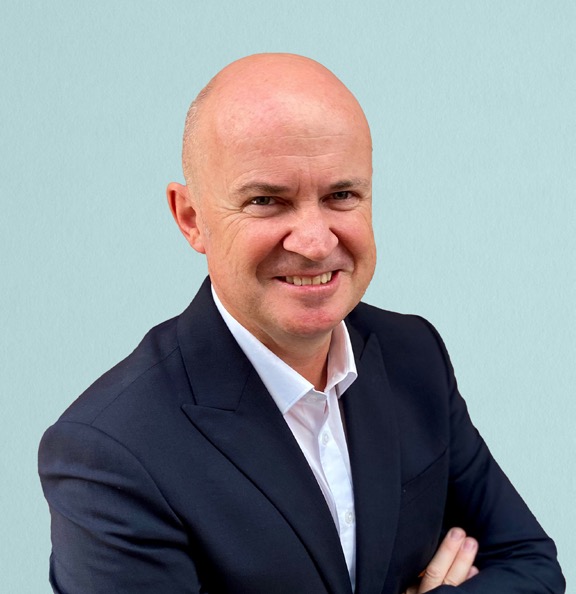
Dr Stephen McCormac, Founder and Coach, Ambrose and Bell

Executive coaching at Ambrose and Bell is a structured, confidential one-to-one engagement with a senior leader. The coach in the seat has run businesses, carried a P&L, and held statutory directorships. The coaching is delivered against credentials. Henley Business School Professional Certificate in Executive Coaching, Level 7. EMCC Senior Practitioner accreditation. Selected assessment tools chosen to fit the engagement, alongside a defined set of proprietary frameworks developed over twenty-five years of operating roles.

Every coaching engagement is led by Stephen as the principal coach. Where the brief calls for a different style or sector experience, A&B brings in named coaches Stephen works with directly.

The work pairs accredited coaching practice with operator context. Where most coaching engagements stop at reflection and self-awareness, we go further. We coach the leader on the specific decisions in front of them, and we use the systems, gestalt, and solutions-focused approaches that the situation calls for.

What it is not. It is not therapy, mentoring, or consulting under another name. The coaching is held in the coaching contract. The work is the client's. We bring the structure, the challenge, and the operator's read.

The coach in the seat has run businesses, carried a P&L, and held statutory directorships.

3
Named programmes
L7
Henley PCEC, EMCC Senior Practitioner
25
Years of operator experience behind the coaching
20+
Years of leadership and coaching experience
EMCC Global Individual Accreditation Senior Practitioner EMCC UK Member Accredited by the European Mentoring and Coaching Council. Henley PCEC (Level 7) qualified. EIA reference EIA20252829. Practice supervised in line with EMCC standards. Coaching delivered in English or German, virtually or in person. Operating experience across multiple countries on four continents.
Why it pays

The business case for executive coaching

Independent studies put hard numbers behind the case for senior coaching. These are real averages across the category, useful as a floor, not a forecast. The diagnostic of where they hold for a specific leader is in the blog.

788% ROI

Metrix Global study, factoring in productivity and employee retention.

5.7x return

International Coach Federation. Average return on investment for organisations implementing executive coaching.

96% performance lift

Korn Ferry International. Organisations observed individual performance improvements after introducing coaching.

77% business impact

Fortune 500 study. Respondents reported significant impacts on at least one business measure.

65% engagement

ICF and Human Capital Institute. Organisations with strong coaching cultures hit 65% engagement vs 52% without.

42% confidence

Leaders coached report increased confidence in stretch decisions and unfamiliar territory.

Our approach

How we coach

Six principles run through every engagement. Method follows the work, not the other way round.

Holistic

We work with the whole leader. Values, identity, and goals sit in the room alongside the operating decision.

True partnership

Coaching is a working relationship, not a service delivered. We co-create the journey with the coachee against the goals agreed at the outset.

Supportive and challenging

A safe space for open reflection, with a firm push to test assumptions and act on them.

Empowering, not directing

The work is the client's. We bring structure, challenge, and an operator's read. The decisions are theirs.

Tools and frameworks

Selected assessment tools at diagnostic, and a defined coaching toolkit drawing on solutions-focused, gestalt, systems, and cognitive behavioural approaches.

Flexible and accessible

Sessions delivered virtually or in person, fitting senior diaries across geographies and travel constraints.

Programmes

Three named programmes

Coaching is delivered as one of three programmes. The programme is chosen at contracting, against the work the coachee or sponsor is bringing to the room.

1:1 Executive Coaching

One-to-one coaching for a senior leader carrying real accountability.

The core programme. Confidential one-to-one work with a CEO, MD, COO, divisional leader, senior functional leader, or founder. Sessions of 60 to 90 minutes at a cadence agreed with each client. Selected assessment tools at diagnostic, the agreed coaching goals in writing, mid-point review, close-out reflection.

Engagement shape and investment on application

Leadership Cohort Programme

A coordinated coaching programme for two to six leaders inside the same business.

Each coachee has a confidential one-to-one contract that runs in parallel with the others. Periodic cohort sessions sit alongside the one-to-one work, where common themes can be worked at the team level without breaching individual confidentiality. Designed for leadership teams in growth, transition, or post-deal contexts where individual coaching alone misses the collective shift the business needs.

Engagement shape and investment on application

First 100 Days Programme

A structured onboarding engagement for a leader stepping into a new role.

Sessions on a fortnightly cadence, anchored to a defined first 100 days framework. Stakeholder mapping in the first fortnight, operating-rhythm design in the first month, early-decision diligence through the middle phase, and the visible-versus-foundational work split held throughout. Built for sector moves, geography moves, operating-model moves, and post-deal CEO appointments where the first 100 days have to land.

Engagement shape and investment on application

The process

The same four-stage process runs across all three programmes. Session cadence is agreed with each client at contracting.

1Contracting

A two-way chemistry conversation. If we agree to proceed, we contract the engagement: scope, cadence, confidentiality, sponsor involvement, and review points. If the sponsor is the company rather than the individual, we contract a tripartite arrangement with explicit boundaries on what is and is not reported.

2Diagnostic

Selected assessment tools chosen to fit the engagement, a structured intake interview, and where appropriate a 360-degree input or a stakeholder map. We agree the coaching goals in writing.

3The work

Sessions of 60 to 90 minutes at a cadence agreed with each client. Mix of in-person and video, with at least the first session and the mid-point review held in person where geography allows. Session work is supported by a defined toolkit of frameworks for decision-making, stakeholder management, leadership presence, and operating-rhythm design.

4Review and close

A mid-point review against the coaching goals. Final review and close-out at the end of the engagement, with a written reflection on what changed and what to carry forward.

Recent engagements

Seven recent coaching engagements

Coaching is confidential, so engagements are anonymised by role and sector. Stephen has held the coach contract on each of the seven below.

CEO, Swiss manufacturer

Coaching through evaluation of career options, including stay-and-build versus exit-and-redeploy. Selected assessment tools and decision frameworks applied to a structured options analysis.

Founder, marketing agency

Coaching through business expansion ahead of a planned exit, holding the dual frame of growth investment and saleability.

Head of executive recruitment firm

Coaching through business expansion and growth-stage leadership decisions. Go-to-market, talent build, and the personal capacity question that comes with founder-led scaling.

Head of consulting services, SaaS firm

Coaching to develop leadership capability and drive transformation across the services function. Personal leadership stretch combined with the operating challenge of building services depth inside a product-led organisation.

CFO, communications infrastructure

Coaching across the dual challenge of in-role performance improvement and active career transition. The work straddles operating delivery and personal direction.

Chief Data Officer, global advertising group

Coaching through career transition and work-life balance, with the work crossing functional career strategy and the operating-rhythm question that goes with C-1 roles in matrixed organisations.

Head teacher, large English independent school

Coaching through transformation leadership in a governance-heavy environment. Education leadership combines unusual stakeholder complexity (governors, parents, pupils, staff) with operating-model change.

What clients say

In their words

Anonymised quotes from coachees, used with permission. Names withheld for confidentiality.

"Stephen is considered, empathetic and patient in his interactions. He fosters trust and a safe environment to reflect, challenge and grow. That's everything you would ask for in a coach, mentor and counsellor."

Senior leader, post-corporate transition

"After a few sessions, I felt much more confident regarding how to grow my business, build a team, and the marketing and sales strategies I hadn't yet explored. He's very strategic, empathetic, and a great sounding board."

Founder, professional services

"Thanks again for your coaching, it really helped me a lot. The decision that you helped me arrive at is still, and even more, valid. I would not hesitate to refer you."

Senior executive, considering CEO transition

"Thank you for your time and the sessions we have had. It has been extremely useful for me and at times thought provoking."

Business leader, peer advisory member

Outputs and deliverables

The output of executive coaching is a different leader, not a document. What the engagement produces in writing:

Coaching contract

Signed at the outset by coach, coachee, and (where the company is paying) sponsor.

Assessment synthesis

Selected assessment tools, structured intake interview, and where appropriate a 360 or stakeholder map.

Agreed coaching goals

Written goals signed off by coachee and sponsor at the diagnostic phase.

Mid-point review

Progress against the coaching goals. Sponsor receives a written progress note within the agreed boundary.

Close-out reflection

Written reflection on what changed and what to carry forward. Sponsor receives a closing progress note.

Who it is for

Executive-level operators carrying real accountability.

C-suite leaders

CEOs, managing directors, divisional MDs, COOs and other C-suite leaders.

Senior functional leaders

Running a P&L or a critical capability inside the business.

Founders in transition

Preparing to bring in a CEO or to step up to chair.

Boards and NEDs

Working through the move from executive to board contribution.

PE-backed CEOs

Newly appointed, in the first weeks of the role.

Leaders carrying transformation

A major transformation, acquisition integration, or turnaround alongside business as usual.

Succession candidates

High-performers identified for succession into a C-suite role.

Leaders working internationally

Cross-cultural and multi-country roles, including DACH, UK, US, and global matrix structures. Stephen has operated across multiple countries on four continents. Coaching delivered in English or German.

It is not the right work for early-career professionals seeking developmental coaching, for performance management of an underperformer, or for clients looking for sector-specialist mentoring rather than coaching.

This is for you if

  • You are an executive-level operator carrying real accountability, often newly in the seat.
  • You are carrying a major transformation, acquisition integration, or turnaround alongside business as usual.
  • You are a founder in transition, or a succession candidate identified for a C-suite role.
  • You want operator-context coaching, not pure facilitation.

This is not the right fit if

  • You are an early-career professional seeking developmental coaching.
  • You want performance management of an underperformer.
  • You want sector-specialist mentoring rather than coaching.
Where this has been done

Proof

Engagement shape and pricing

Engagement shape and investment are scoped per programme. Where the engagement is sponsored by the company, the commercial contract sits with the company and the coaching contract sits between coach and coachee. Fees are paid monthly in arrears against an agreed schedule. The right number depends on the programme, the cadence, and whether the engagement includes assessment instruments and 360-degree input. Investment on application.

For sponsors and HR

When the company is paying

Most coaching engagements are sponsored. The company pays, the people director or HR business partner brings the work, and the coachee sits inside a wider leadership build. The contract is set up to handle this cleanly.

Tripartite contract

Coach, coachee, and sponsor sign a single contract at the outset. Goals, cadence, duration, reporting boundary all named. The boundary is set so the sponsor sees enough to know the engagement is on track without compromising what the coachee needs to bring to the room.

Procurement and supplier set-up

Ambrose and Bell Limited is a UK private limited company, VAT registered, with professional indemnity and public liability cover in place. MSAs, SoWs, data processing addenda, and insurance evidence available on request.

Reporting cadence

Two written progress notes during the engagement, at the mid-point and the close, plus an optional sponsor check-in conversation at each milestone. Progress notes describe themes and direction of travel, not session content.

Connection to wider development

Where the coaching is part of a broader leadership programme, succession plan, or post-deal integration, we coordinate with the people team on how the coaching outcome connects to the wider build. The Leadership Cohort Programme is designed for exactly this case.

Related

Frequently asked questions

Henley Business School Professional Certificate in Executive Coaching, Level 7. EMCC Senior Practitioner accreditation, awarded on the basis of twenty-five years of building and developing leadership teams in operating roles. Selected assessment tools within a structured coaching toolkit, chosen to fit the engagement.
Coaching is a confidential conversation between two people. The coachee is bringing a real decision to the room. A coach who has carried a P&L, held statutory directorships, and run a business through transition can hold the conversation at the operator's altitude rather than dropping back into general developmental ground.
No. The coaching contract is confidential. Where the company is the sponsor, the sponsor receives a written progress note at the mid-point and the close, within a boundary agreed in the tripartite contract at the outset. Specifics from the room never leave it.
Two things. First, the operator context. Second, the toolkit. The coaching is grounded in accredited practice, then layered with the frameworks and operating-model thinking that the work actually calls for.
Yes, where the team work is the right intervention. Team coaching is contracted separately from one-to-one work and is normally paired with a Leadership Team Assessment so the team work has a structural foundation.
Yes. Practice supervision is part of how the coaching is held to professional standard, and is a requirement of EMCC accreditation. Supervision sessions inform reflective practice and ethical conduct, and are confidential to the coach.
Sponsor reporting is contracted at the outset in a tripartite arrangement between coach, coachee, and sponsor. The sponsor receives a written progress note at the mid-point and the close, within an explicit boundary agreed in the contract. Specifics from the coaching room never leave it. The boundary is set so that the sponsor sees enough to know the engagement is on track without compromising the confidentiality the coachee needs to do real work.
Coaching goals are agreed in writing at the diagnostic phase, with the coachee and the sponsor signing off the same set. Mid-point and close-out reviews track progress against those goals. The output is a different leader, not a document, so measurement is anchored to the agreed goals rather than to a generic competency framework. Where the engagement is part of a wider leadership build, we coordinate with HR or the people team on how the coaching outcome connects to broader development plans.
1:1 Executive Coaching is one-to-one work with a single senior leader. Leadership Cohort Programme is a coordinated programme for two to six leaders inside the same business, combining one-to-one sessions with periodic cohort work. The First 100 Days Programme is a structured engagement on a fortnightly cadence, designed for a leader stepping into a new role. Sponsors choose the programme that fits the work, and the same coach holds the contract across all three. Engagement shape and investment on application.
From the blog

Writing on the work

Three pieces from our writing that sit close to the coaching work.

All articles →

Talk to us about coaching

A short conversation tells both of us whether the work fits.